


LIGHT IN THE HOME: HOW THOUGHTFUL LIGHTING DESIGN CREATES MOOD AND COMFORT
1. Light as the Architecture of Emotion
Lighting in a home is more than a functional necessity—it is an emotional layer, a visual guide, and an architectural tool. In luxury interior design, designers do more than install light; they orchestrate it. As a result, the space comes alive, materials reveal their texture, and residents experience their home on a sensory level.
Every home has a natural rhythm—waking up, being active, and winding down. To enhance this flow, lighting follows the rhythm rather than interrupting it. For instance, soft morning light, golden afternoon tones, and intimate evening warmth can all be recreated through thoughtful lighting design.
As Alex Kovatchev says: “Good light is not seen—it is felt.”
In essence, a truly luxurious home uses lighting as an experience, not merely a feature.
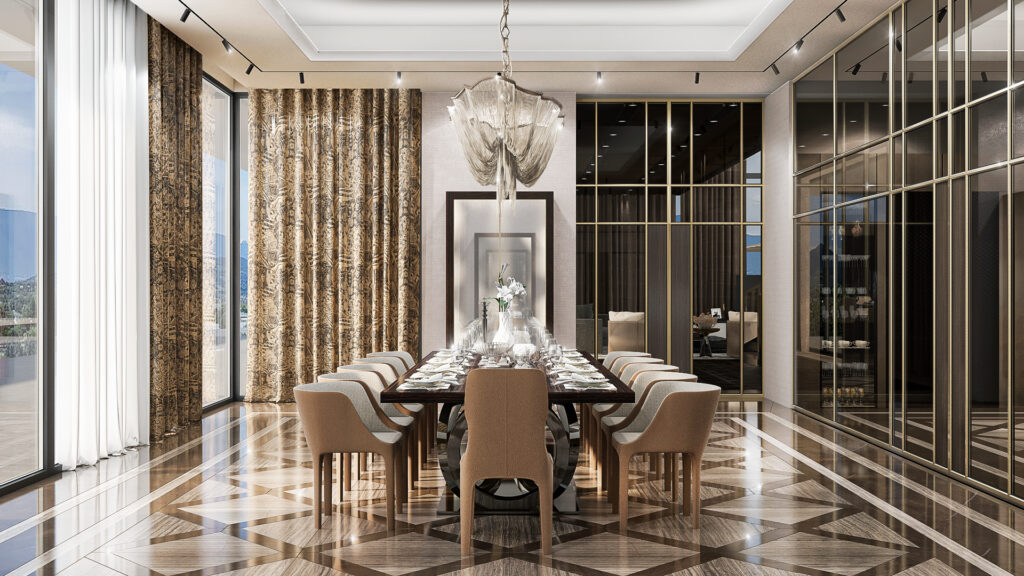
Light shapes the first impression—bringing warmth and harmony to a luxurious home by IDEA International.
2. The Psychology of Light: How It Shapes Mood
Light directly influences emotions, behavior, and comfort. For example, warm, dimmed lighting fosters calmness, while cooler tones stimulate focus. Moreover, the contrast between brightness and shadow adds both visual depth and emotional richness.
Luxury home lighting varies by room:
✔ Living room: soft, diffused, with hidden light sources
✔ Kitchen: functional yet never harsh
✔ Bedroom: low, warm light with smooth dimming options
Therefore, lighting is one of the fastest ways to shift the mood in a luxury home. In addition, it can subtly guide daily routines and activities.
3. The Layered Approach: Giving Each Space Its Character
In high-end interior design, lighting works in layers—not just through fixtures. Specifically, each layer serves a purpose:
✔ Ambient lighting: provides the overall foundation
✔ Accent lighting: highlights art, textures, or architectural features
✔ Decorative lighting: adds emotion and a visual signature
Together, these layers create depth, elegance, and subtle drama. As a result, a home can feel like a curated work of art rather than a collection of rooms.
4. Light and Materials: A Dialogue of Textures
Materials interact with light in unique ways. For instance:
✔ Marble: reflects with a soft, elegant glow
✔ Matte wood: absorbs light to create warmth
✔ Metal: scatters highlights across the room
✔ Textiles: diffuse and soften the atmosphere
Moreover, indirect light on a suede wall adds visual depth. Hidden LED strips can turn stone countertops into living textures.
Additionally, golden reflections on wooden slats create warmth and a sense of luxury.
Ultimately, lighting does more than illuminate—it reveals the soul of materials.
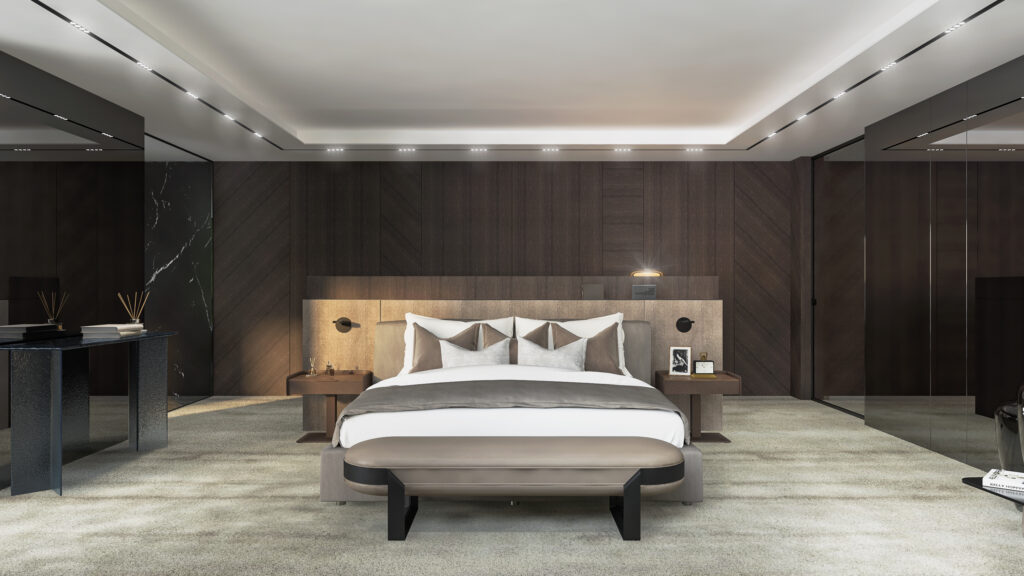
Light highlights the texture and warmth of materials in the home.
5. Lighting and the Architecture of the Body
Good lighting serves both the interior and the person inside it. The way light falls on the face, shapes the silhouette, and creates shadows influences how people perceive themselves.
Interestingly, one of the subtle differences between a low-budget and a high-end interior lies here:
In the first, people may feel exposed.
In the second, they feel harmonious and comfortable.
And this has little to do with furniture—it’s all about the light.
6. Technology with an Invisible Presence
Modern luxury avoids visible switches and cables. Today, lighting control is both digital and emotionally adaptive. Smart systems offer:
✔ Automatic changes based on time of day
✔ Intelligent sensors
✔ Pre-set lighting scenes
Moreover, systems such as Human Centric Lighting and Circadian Light Control mimic natural daily rhythms. This helps the home work in harmony with the body—improving sleep, focus, and overall well-being.
Technology enhances human experience rather than replacing it.
7. Light as the Signature of Luxury
True luxury never tries to impress—it creates a sense of balance, ease, and control. In the interiors designed by Alex Kovatchev, lighting often becomes the project’s subtle but decisive signature.
It doesn’t shine outward; it glows from within, creating a visual rhythm that turns the home into a quiet stage without an audience.
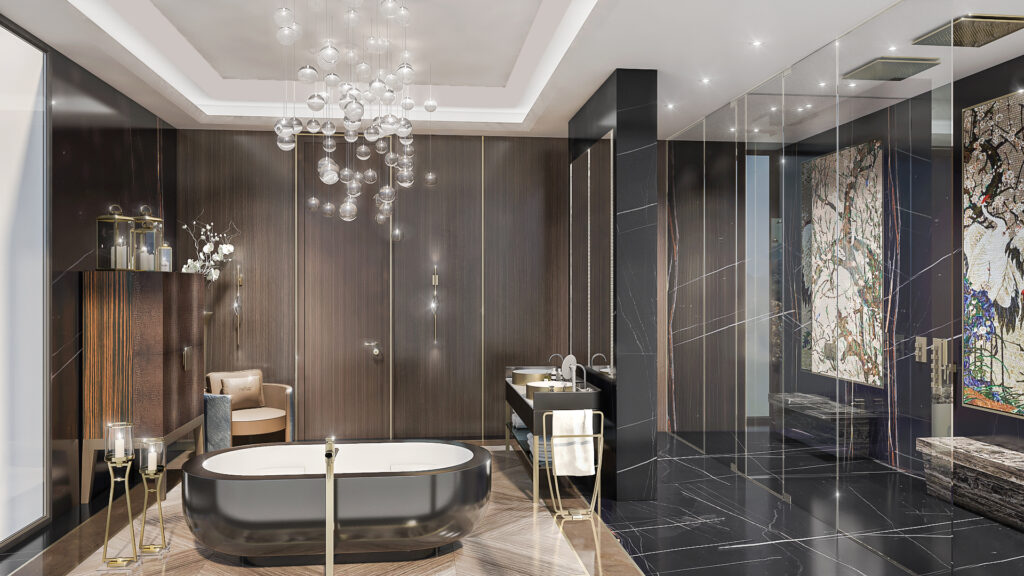
Light as the signature of luxury in the bathroom — creating visual rhythm and balance in the interior.
8. Conclusion: Design That Glows Without Lamps
The best lighting is the light you don’t notice. When a home appears illuminated by its own presence, the interior is complete. Lighting is psychology, aesthetics, and emotion all at once.
And when it is thoughtfully designed, the home doesn’t simply shine—it breathes.
Explore our full range of interior design services
How Luxury Is Created – The Art of Detail in Interior Design | IDEA
What Is a Loft and Why Are Loft Apartments So Popular? | IDEA